
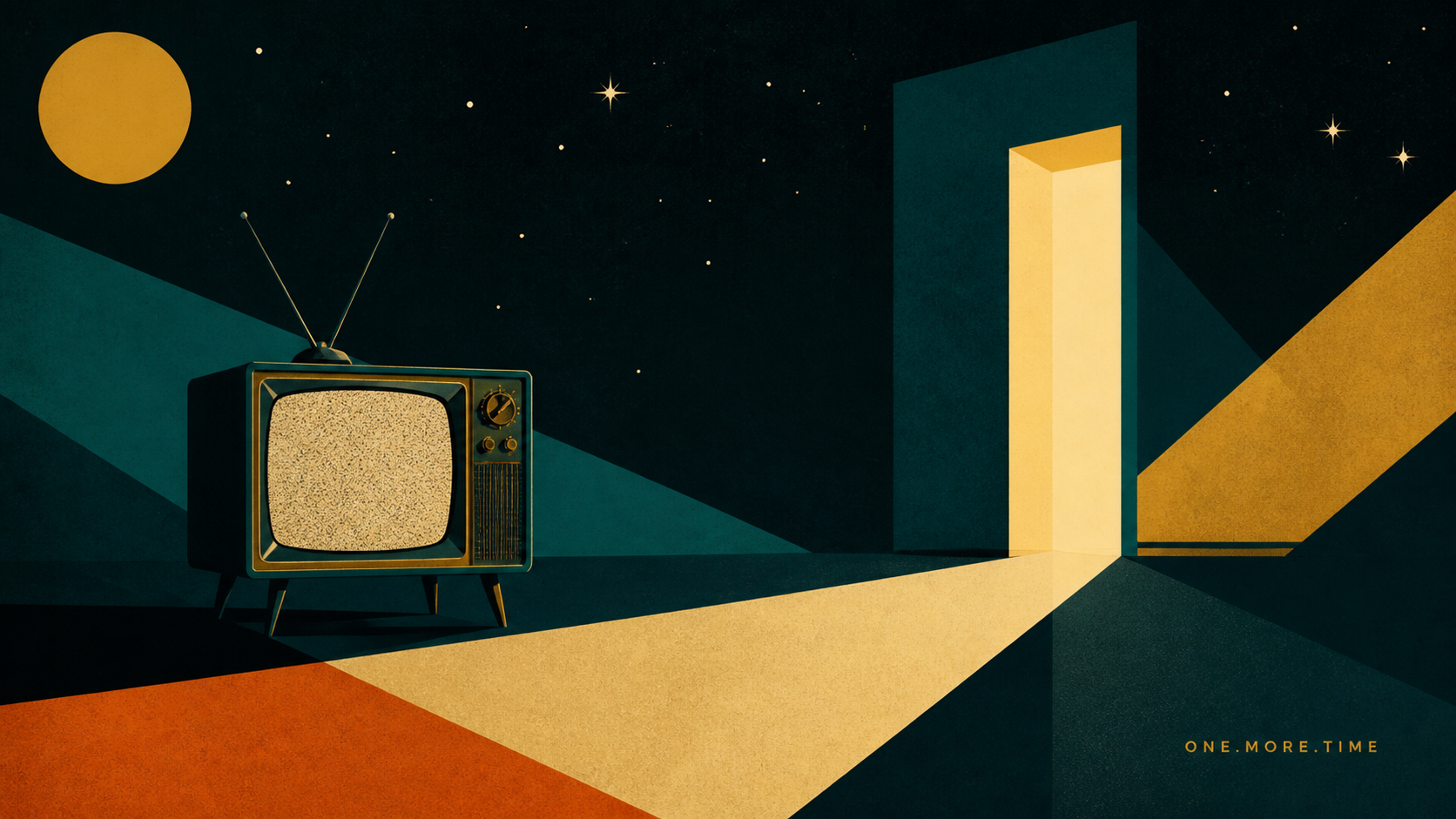
On October 2, 1959, a quiet black-and-white anthology series invited American viewers to step beyond the familiar—and television was never quite the same.
A doorway disguised as a television program
The Twilight Zone arrived at the end of a decade that had transformed television from a novelty into a shared national ritual. Creator and principal writer Rod Serling understood both the power of that ritual and its limits. He had already written acclaimed live television dramas, but he had also watched sponsors and networks soften material that confronted racism, intolerance, and institutional power.
Science fiction offered him a solution. A story set in an imaginary town—or on another planet—could say things that a conventional contemporary drama could not. The strange machinery, impossible journeys, and uncanny visitors were never merely decoration. They created enough distance for viewers to recognize themselves.
The first invitation
The premiere episode, “Where Is Everybody?,” begins with a man walking into an apparently ordinary town. The streets are clean. Coffee is hot. A telephone rings. Yet no other person can be found. The episode builds its unease from absence rather than spectacle: empty rooms, unanswered questions, and the growing terror of being completely alone.
That structure became one of the series’ signatures. Begin with something recognizable. Add one impossible condition. Then follow the character until the situation reveals a moral, psychological, or social truth. The famous final reversal was satisfying when it surprised us, but the best episodes did more—the twist forced viewers to reinterpret everything they had just seen.
Why it felt different
- It trusted the audience. Episodes often left room for ambiguity and reflection.
- It made ideas visual. Loneliness, conformity, nostalgia, prejudice, and fear became places and situations.
- It treated genre seriously. Fantasy and science fiction could carry adult drama without apologizing for themselves.
- It respected economy. In roughly half an hour, a memorable premise could become a complete moral fable.
The memory of watching
For many viewers, remembering The Twilight Zone also means remembering how television once arrived: at a particular hour, in a shared room, with no pause button and no guarantee that the episode would be seen again soon. The opening music, Serling’s measured voice, and the glowing screen created a weekly threshold. Crossing it was a small domestic ceremony.
Later generations found the series through reruns and marathons, often encountering episodes out of order. That accidental method of discovery
Leave a Reply